Once upon a time, in a kingdom far away, a King and Queen desired to have a family. Their names were King Stefan and Queen Leah. They ruled the kingdom together, caring for the needs of every citizen. Yet, every evening before retiring they would talk of the day that they would be able to care for a son or a daughter. It would be many years before their desires would be fulfilled.
 One day, the bells rang out announcing the arrival of a beautiful baby girl. To celebrate the birth of their daughter, King Stefan and Queen Leah opened the palace to allow every citizen the opportunity to meet the princess, who they named, Aurora. The young and old, fat and skinny, rich and poor lined up and waited their turn to see the newest royal. As each person stopped to admire the smiling baby they left a token of their affection.
One such person was an old woman who walked slowly up to the cradle and gazed into Aurora’s innocent blue eyes, and wished aloud:
“May you continue to see the beauty of the world through eyes of innocence,” and then laid a garland of forget-me-nots across the canopy of the cradle.
Next came a young father with his three-year-old son and they both smiled and laughed when the babe reached up to touch the boy’s face. The boy leaned closer to the baby so that her tiny fingers could brush his cheeks. The boy smiled and whispered:
“You are so beautiful, I will love you forever.”

The little boy reached into his jacket pocket and pulled out a pony carved from cedar and placed it at the base of the steps leading up to the cradle. The father placed a tiny rocking chair shaped from the same tree next to the cradle.
Each gift was given, a symbol of the deeds, trade, or skill of the giver. As the last person walked through the palace gates and the sun slipped beneath the veil of night, the little princess closed her eyes and drifted off to sleep. Queen Leah scooped up the tiny babe and carried her to the nursery to dream.
At the other end of the kingdom, the little boy and his father talked about the princess. The little boy softly whispered before he fell asleep,
“I hope that I can marry the princess when we are both older.” The father nodded and whispered back:
“Joseph, my sweet boy,” the father paused to brush his son’s hair. “Aurora is a princess and will marry a prince.”
Joseph looked up at his father and asked: “What if I said, please?”
Years passed and Aurora continued to grow in beauty and kindness. She was patient and thoughtful; wishing to help anyone she met. Everyone who knew her adored her and longed to be near her. However, what most didn’t know was how lonely Aurora was and she longed for true love. For when she was a little girl her nanny would tell her bedtime stories about princesses finding true love and of valiant knights who rescue the princess from an evil step-mother or a wicked witch. Aurora believed that there must be a prince out there who would be her knight in shining armor.
Aurora carried this dream with her and when her parents announced that they were going to throw a ball for her 16th birthday she truly believed that she would meet her prince. She started thinking about how she would wear her hair and what color of dress she would have made for this special day. While preparations for the ball were underway, Aurora’s mother came to her room and presented a beautiful white lace ball gown.
“This is the dress I wore on my 16th birthday, and I thought that you might like to wear it to the ball.”
“It is so beautiful and I would be honored to wear it.”
Aurora’s mother smiled and added, “I know that you love the rose garden and all it’s beautiful blossoms and thought that you might want to add a bit of that color to the gown.”
Aurora looked at her mother and agreed that a little lilac and lavender would be great around the hem of the dress.
The day of the ball arrived and guests began arriving to stay at the palace. Aurora peeked through the tapestries at the guests to see if she could spot her one true love, but he didn’t seem to be there. Aurora grew a little sad but was still filled with hope.
Finally, the time arrived and Aurora was ready to be presented at the ball. Her mother, Queen Leah, joined her at the top of the grand staircase and descended towards her father, King Stefan, who waited to take her hand. As King Stefan guided her to the dance floor, Aurora looked around the ballroom to see if she could find her prince. There were so many fresh faces beaming among the host of guests she was certain that one of them must be her prince.
The evening was full of meeting various princes from far distant lands; each telling her of their victories and accomplishments; bringing honor to their respective kingdoms. There was one prince that captured Aurora’s heart and she thought:

“This must be the prince that I have been waiting for.” She asked her parents if they would invite this prince and his parents to stay for a season so that she could get to know this young man. And of course, they accepted.
Prince Phillip became Aurora’s constant companion on horseback rides and garden strolls. They stayed up late and read books by candlelight. Sometimes they just sat by the fireplace making plans for the next day. Aurora was in love and hoped that Phillip would propose marriage before her 17th birthday.
On the eve of her 17th birthday, Aurora and Phillip picnicked in the gardens. As they were strolling along the paths, Aurora began to share her dreams for the future with Phillip; thinking that this may prompt him to ask for her hand. Finally, she simply asked:
“Phillip, don’t you want a family?”
“I guess I haven’t thought about it. I really enjoy being free and enjoying all that life has to offer.”
Aurora was a little surprised. She thought that Phillip understood why he and his parents had been invited to stay at the palace. They continued their walk through the gardens until the shadows of dusk spread across the pathways. They returned to the palace and joined their parents for dinner in the dining hall. Aurora sat quietly, staring at her plate, while Phillip consumed everything on his plate as quickly as possible. The parents were so engrossed in their conversations about politics and the weather that they did not notice a change in their children.
Eventually, Aurora excused herself and went to her room. She sat in the bay window overlooking the grounds and began to weep. As she continued in this posture, rustling beneath her window caused her to sit silently. In the stillness, she observed at the far end of the garden a person walking the path towards the stables; disappearing behind a hedge.
Aurora stood and leaned over the window sill hoping to get a better look. Since the lone figure had disappeared so quickly she grabbed her cloak and speedily traversed the stairs and halls, escaping through a side door to the gardens. Aurora commenced upon the same path hoping to come upon the stranger who had disappeared behind the hedge. As she reached the stables she heard her Phillip speaking:
“You are so beautiful and I think I have fallen in love with you.”
“This can not be. I am but a servant.”
“I am a prince,” Phillip replied. “If I desire to be with you, I will.”
Aurora stood in the shadows listening to Phillip confess his love and wondered which servant girl had evoked such commitment. She stepped from the shadows to catch a glimpse and silently looked upon the fair maiden locked in Phillip’s embrace.
“The milkmaid?” Aurora questioned aloud. Then overcome with surprise and grief, Aurora ran past Phillip and the maiden. Phillip called after:
“Aurora! Wait!”
 She continued running, hoping to get as far away as she could from the warm embrace that was seared into her mind. The betrayal and loss were too much for Aurora. She wept and ran blindly; reaching the edge of the forest. Suddenly stopping, Aurora gazed up into the night sky; from the very depths of despair she let out a cry; stirring every sleeping creature and beast; giving in, collapsed upon the forest floor. A silent figure at the edge of the kingdom.
There she lay lifeless; the shadows stretching long across the ground. But there in the depths of the trees, a single figure stepped out from a grove of trees into the light of the rising moon; revealing the pleasant countenance of a young man, who had once been the young Joseph. The very one who had confessed his love for Aurora so many years ago.
 Slowly, Joseph laid his ax against the trunk of a nearby tree; moving towards the fallen princess and then knelt beside Aurora; brushing golden strands from her tear-stained cheeks. Pulling off his cloak he laid it across the tiny frame and then slowly lifted her; supporting her head against his shoulder and cradling her broken body with his arms to carry her back to the palace. As he approached, the guards already aware that the princess was outside the walls realized that Joseph was carrying her and they quickly opened the gates allowing them to enter.
King Stefan and Queen Leah rushed out, meeting Joseph at the same stairs where the baby Aurora had been presented to the kingdom. Relief drawn across their faces.
“What has happened?” Queen Leah questioned.
“I found her in the forest at the edge of the kingdom” replied Joseph.
Queen Leah looked upon her daughter’s face and noticed the tear stains and then returned her gaze to Joseph. Anticipating her question, Joseph replied:
“I do not know why she was there and I don’t know why she was in distress.”
 “Are you okay to continue carrying her?” King Stefan asked and Joseph responded with a nod.
Joseph followed King Stefan and Queen Leah through the halls and passages and up many flights of stairs. Eventually, they came out upon a room in the tallest tower where a cedar bed with ivory linens stood alone in its center. Joseph carefully walked towards the bed and placed Aurora on the bed and then backed away; gazing upon the face of the woman he loved. He whispered to himself:
“I wish there was something that I could do to ease your suffering.”
As this wish escaped his lips a blue light flashed filling the room. King Stefan, Queen Leah, and Joseph stood in awe as a figure emerged from the light.
“I heard your heart’s desire and I can grant it. However, this will require a great sacrifice born of true love.”
Joseph looked upon the visage of this ethereal creature and wondered whether she was good or evil.
He then looked into her eyes and knew that there was nothing evil in this presence.
“I will give anything for Aurora, for I have loved her since the day that I looked upon her face.”
Joseph stepped forward and then knelt in supplication, whispering “Please.”
Queen Leah began to weep, feeling the deep love that Joseph had for her daughter. King Stefan brushed a single tear from the corner of his eye.
“Are you willing to take upon her suffering?”
 Queen Leah gasped.
“What do you mean?” King Stefan asked.
Joseph nodded and then asked, “If I take upon her suffering will Aurora be made whole?”
“Yes,” replied the Angel.
“How will I take her suffering upon myself?”
“In the garden, there is an ancient olive tree whose fruit contains the balm of healing. Gather the forget-me-nots that bloom at the base of this tree.” There was a deep sadness in her voice as she continued, “Weave the flowers into a garland and place it across the canopy of the bed where the princess sleeps.”
 Joseph nodded and then quickly left the room and descended the stairs and then out into the gardens to search for the ancient tree. When he came upon the tree he fell to his knees and pled again:
“Please spare Aurora.”
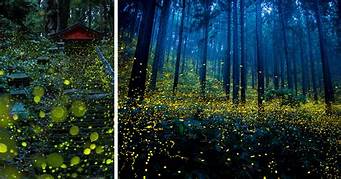
Tiny fireflies began to rise from the ground shedding light upon the forget-me-nots. Joseph carefully gathered the tiny flowers and began to weave them into a garland long enough to place across the canopy of Aurora’s bed. As the rays of the new day streamed through the branches of the ancient tree, Joseph weaved the last flower in place. He rose, and solemnly walked back to the palace and up the stairs to the room, placing the garland of forget-me-nots across the canopy.
“The garland is beautiful!” Queen Leah exclaimed and then she realized that a similar garland was left upon the cradle when Aurora was a babe.
Joseph turned to the Angel.
“Well done, Joseph,” the Angel examined Joseph carefully and then continued, “You must now make a crown from the branches and stems from the rose bushes that bare the deepest of crimson blossoms.”
 Joseph’s eyes opened wide; for he knew exactly where to find them. When Joseph was a small boy, his mother had planted rose bushes along the path from the road to their front doorstep. These bushes had continued to produce the most beautiful red roses in the entire kingdom. And then he felt a deep pain in his heart. The only memory he had of his mother was the roses, for she had died the day before Aurora was born.
“If I create this crown, as you have asked, the rose bushes will die.”
“Yet, you said you would do anything to help Aurora.”
Joseph looked down at his feet; pondering what he should do. He loved his mother and wished to always remember her. He loved Aurora and wanted her to recover and he did say that he would do anything for her.
Looking up, he said, “I will go and return when I am done.”
 Joseph left more slowly than he did before and he made it to his home by noon. The sun shone brightly upon the path of rose bushes. He walked into his home and removed a pair of sheers from the cabinet next to the front door and returned to the path. He considered each bloom as he clipped them from the branches; falling like drops of blood upon the ground. All that remained; fleshy green marrow of stems protected by razor-sharp thorns. With crimson petals covering the ground; Joseph began selecting and cutting away the stems that would be perfect to create the crown.
Joseph labored over the crown as the sun passed through the sky and as it set behind the palace spires the last stem was braided; completing the circle. Joseph looked down upon this crown and noticed that the green stems were now dark; stained from the blood that had been drawn from his fingers as he had braided the crown. Joseph walked to the well beside the house and drew up some water in a bucket. Using a ladle, he poured some water into the wooden goblet that hung on the well and took in a long, deep, cold draft of water. Refreshed from the well-spring, Joseph began his journey back to the palace. With the crown of thorns cradled in his hands, he stepped into the torchlight of the room. King Stefan and Queen Leah looked upon Joseph and became sorrowful.
“Please place the crown at the foot of the bed,” the Angel motioning towards the center of the room. Joseph obeyed. Before he left the foot of the bed, he looked upon Aurora hoping to see any sign that she was returning from her slumber. Yet, the angelic countenance did not change. Joseph turned and looked at the visitor, questioning: “Why does she not stir?”
“You have one last task.”
King Stefan, Queen Leah, and Joseph looked upon the Angel that appeared to grow and reshape with wings emerging and spreading; spanning the width of the room.
“In Heaven the angels observe mankind, waiting for souls to reveal themselves. You are one such soul.”
Joseph shook his head in disbelief. He was just a carpenter’s son and had nothing to offer beyond his willingness to save Aurora.
“Your love is all that is required to save Aurora,” the Angel replied.
Still puzzled, Joseph just gazed upon the Angel.
“Greater love hath no man than this, that a man lay down his life for his friends.”
The words filled the room and all eyes were rested upon Joseph.
“I give it freely,” and there at that moment, Joseph slumped to the ground.
Aurora sat up and looked upon the scene in wonder. She left the bed and joined Joseph on the floor, cradling his head in her arms. She kissed his lips and traced his cheeks with her tender fingers. Tears flowed freely; washing away the blood from Joseph’s hands; revealing the wounds on his palms.
 The news of Aurora’s recovery spread throughout the palace and many came to the room where Joseph lay. Two guards came to the room; taking Joseph up and laying him upon the bed. Aurora walked to the head of the bed and raised Joseph’s head upon a pillow. She dressed his wounds and anointed him with the oil from the ancient tree in the palace garden. The crown of thorns was nailed to the wall above Joseph’s head. Aurora turned to the Angel and said:
“He does not seem entirely lost to me. He appears to just be sleeping.”
“He lives,” was the Angel’s only reply.
To this day, Joseph remains upon the ivory bed; Queen Aurora ever by his side. The legend says that the crown of thorns sprung new life; spreading its vines to cover the walls of the chamber with the most beautiful red roses. At night the canopy of forget-me-nots is drawn closed; the veil between betrayal and redemption.

One such person was an old woman who walked slowly up to the cradle and gazed into Aurora’s innocent blue eyes, and wished aloud:
“May you continue to see the beauty of the world through eyes of innocence,” and then laid a garland of forget-me-nots across the canopy of the cradle.
Next came a young father with his three-year-old son and they both smiled and laughed when the babe reached up to touch the boy’s face. The boy leaned closer to the baby so that her tiny fingers could brush his cheeks. The boy smiled and whispered:
“You are so beautiful, I will love you forever.”
The little boy reached into his jacket pocket and pulled out a pony carved from cedar and placed it at the base of the steps leading up to the cradle. The father placed a tiny rocking chair shaped from the same tree next to the cradle.
Each gift was given, a symbol of the deeds, trade, or skill of the giver. As the last person walked through the palace gates and the sun slipped beneath the veil of night, the little princess closed her eyes and drifted off to sleep. Queen Leah scooped up the tiny babe and carried her to the nursery to dream.
At the other end of the kingdom, the little boy and his father talked about the princess. The little boy softly whispered before he fell asleep,
“I hope that I can marry the princess when we are both older.” The father nodded and whispered back:
“Joseph, my sweet boy,” the father paused to brush his son’s hair. “Aurora is a princess and will marry a prince.”
Joseph looked up at his father and asked: “What if I said, please?”
Years passed and Aurora continued to grow in beauty and kindness. She was patient and thoughtful; wishing to help anyone she met. Everyone who knew her adored her and longed to be near her. However, what most didn’t know was how lonely Aurora was and she longed for true love. For when she was a little girl her nanny would tell her bedtime stories about princesses finding true love and of valiant knights who rescue the princess from an evil step-mother or a wicked witch. Aurora believed that there must be a prince out there who would be her knight in shining armor.
Aurora carried this dream with her and when her parents announced that they were going to throw a ball for her 16th birthday she truly believed that she would meet her prince. She started thinking about how she would wear her hair and what color of dress she would have made for this special day. While preparations for the ball were underway, Aurora’s mother came to her room and presented a beautiful white lace ball gown.
“This is the dress I wore on my 16th birthday, and I thought that you might like to wear it to the ball.”
“It is so beautiful and I would be honored to wear it.”
Aurora’s mother smiled and added, “I know that you love the rose garden and all it’s beautiful blossoms and thought that you might want to add a bit of that color to the gown.”
Aurora looked at her mother and agreed that a little lilac and lavender would be great around the hem of the dress.
The day of the ball arrived and guests began arriving to stay at the palace. Aurora peeked through the tapestries at the guests to see if she could spot her one true love, but he didn’t seem to be there. Aurora grew a little sad but was still filled with hope.
Finally, the time arrived and Aurora was ready to be presented at the ball. Her mother, Queen Leah, joined her at the top of the grand staircase and descended towards her father, King Stefan, who waited to take her hand. As King Stefan guided her to the dance floor, Aurora looked around the ballroom to see if she could find her prince. There were so many fresh faces beaming among the host of guests she was certain that one of them must be her prince.
The evening was full of meeting various princes from far distant lands; each telling her of their victories and accomplishments; bringing honor to their respective kingdoms. There was one prince that captured Aurora’s heart and she thought:
“This must be the prince that I have been waiting for.” She asked her parents if they would invite this prince and his parents to stay for a season so that she could get to know this young man. And of course, they accepted.
Prince Phillip became Aurora’s constant companion on horseback rides and garden strolls. They stayed up late and read books by candlelight. Sometimes they just sat by the fireplace making plans for the next day. Aurora was in love and hoped that Phillip would propose marriage before her 17th birthday.
On the eve of her 17th birthday, Aurora and Phillip picnicked in the gardens. As they were strolling along the paths, Aurora began to share her dreams for the future with Phillip; thinking that this may prompt him to ask for her hand. Finally, she simply asked:
“Phillip, don’t you want a family?”
“I guess I haven’t thought about it. I really enjoy being free and enjoying all that life has to offer.”
Aurora was a little surprised. She thought that Phillip understood why he and his parents had been invited to stay at the palace. They continued their walk through the gardens until the shadows of dusk spread across the pathways. They returned to the palace and joined their parents for dinner in the dining hall. Aurora sat quietly, staring at her plate, while Phillip consumed everything on his plate as quickly as possible. The parents were so engrossed in their conversations about politics and the weather that they did not notice a change in their children.
Eventually, Aurora excused herself and went to her room. She sat in the bay window overlooking the grounds and began to weep. As she continued in this posture, rustling beneath her window caused her to sit silently. In the stillness, she observed at the far end of the garden a person walking the path towards the stables; disappearing behind a hedge.
Aurora stood and leaned over the window sill hoping to get a better look. Since the lone figure had disappeared so quickly she grabbed her cloak and speedily traversed the stairs and halls, escaping through a side door to the gardens. Aurora commenced upon the same path hoping to come upon the stranger who had disappeared behind the hedge. As she reached the stables she heard her Phillip speaking:
“You are so beautiful and I think I have fallen in love with you.”
“This can not be. I am but a servant.”
“I am a prince,” Phillip replied. “If I desire to be with you, I will.”
Aurora stood in the shadows listening to Phillip confess his love and wondered which servant girl had evoked such commitment. She stepped from the shadows to catch a glimpse and silently looked upon the fair maiden locked in Phillip’s embrace.
“The milkmaid?” Aurora questioned aloud. Then overcome with surprise and grief, Aurora ran past Phillip and the maiden. Phillip called after:
“Aurora! Wait!”
There she lay lifeless; the shadows stretching long across the ground. But there in the depths of the trees, a single figure stepped out from a grove of trees into the light of the rising moon; revealing the pleasant countenance of a young man, who had once been the young Joseph. The very one who had confessed his love for Aurora so many years ago.
King Stefan and Queen Leah rushed out, meeting Joseph at the same stairs where the baby Aurora had been presented to the kingdom. Relief drawn across their faces.
“What has happened?” Queen Leah questioned.
“I found her in the forest at the edge of the kingdom” replied Joseph.
Queen Leah looked upon her daughter’s face and noticed the tear stains and then returned her gaze to Joseph. Anticipating her question, Joseph replied:
“I do not know why she was there and I don’t know why she was in distress.”
Joseph followed King Stefan and Queen Leah through the halls and passages and up many flights of stairs. Eventually, they came out upon a room in the tallest tower where a cedar bed with ivory linens stood alone in its center. Joseph carefully walked towards the bed and placed Aurora on the bed and then backed away; gazing upon the face of the woman he loved. He whispered to himself:
“I wish there was something that I could do to ease your suffering.”
As this wish escaped his lips a blue light flashed filling the room. King Stefan, Queen Leah, and Joseph stood in awe as a figure emerged from the light.
“I heard your heart’s desire and I can grant it. However, this will require a great sacrifice born of true love.”
Joseph looked upon the visage of this ethereal creature and wondered whether she was good or evil.
He then looked into her eyes and knew that there was nothing evil in this presence.
“I will give anything for Aurora, for I have loved her since the day that I looked upon her face.”
Joseph stepped forward and then knelt in supplication, whispering “Please.”
Queen Leah began to weep, feeling the deep love that Joseph had for her daughter. King Stefan brushed a single tear from the corner of his eye.
“Are you willing to take upon her suffering?”
“What do you mean?” King Stefan asked.
Joseph nodded and then asked, “If I take upon her suffering will Aurora be made whole?”
“Yes,” replied the Angel.
“How will I take her suffering upon myself?”
“In the garden, there is an ancient olive tree whose fruit contains the balm of healing. Gather the forget-me-nots that bloom at the base of this tree.” There was a deep sadness in her voice as she continued, “Weave the flowers into a garland and place it across the canopy of the bed where the princess sleeps.”
“Please spare Aurora.”
Tiny fireflies began to rise from the ground shedding light upon the forget-me-nots. Joseph carefully gathered the tiny flowers and began to weave them into a garland long enough to place across the canopy of Aurora’s bed. As the rays of the new day streamed through the branches of the ancient tree, Joseph weaved the last flower in place. He rose, and solemnly walked back to the palace and up the stairs to the room, placing the garland of forget-me-nots across the canopy.
“The garland is beautiful!” Queen Leah exclaimed and then she realized that a similar garland was left upon the cradle when Aurora was a babe.
Joseph turned to the Angel.
“Well done, Joseph,” the Angel examined Joseph carefully and then continued, “You must now make a crown from the branches and stems from the rose bushes that bare the deepest of crimson blossoms.”
“If I create this crown, as you have asked, the rose bushes will die.”
“Yet, you said you would do anything to help Aurora.”
Joseph looked down at his feet; pondering what he should do. He loved his mother and wished to always remember her. He loved Aurora and wanted her to recover and he did say that he would do anything for her.
Looking up, he said, “I will go and return when I am done.”
Joseph labored over the crown as the sun passed through the sky and as it set behind the palace spires the last stem was braided; completing the circle. Joseph looked down upon this crown and noticed that the green stems were now dark; stained from the blood that had been drawn from his fingers as he had braided the crown. Joseph walked to the well beside the house and drew up some water in a bucket. Using a ladle, he poured some water into the wooden goblet that hung on the well and took in a long, deep, cold draft of water. Refreshed from the well-spring, Joseph began his journey back to the palace. With the crown of thorns cradled in his hands, he stepped into the torchlight of the room. King Stefan and Queen Leah looked upon Joseph and became sorrowful.
“Please place the crown at the foot of the bed,” the Angel motioning towards the center of the room. Joseph obeyed. Before he left the foot of the bed, he looked upon Aurora hoping to see any sign that she was returning from her slumber. Yet, the angelic countenance did not change. Joseph turned and looked at the visitor, questioning: “Why does she not stir?”
“You have one last task.”
King Stefan, Queen Leah, and Joseph looked upon the Angel that appeared to grow and reshape with wings emerging and spreading; spanning the width of the room.
“In Heaven the angels observe mankind, waiting for souls to reveal themselves. You are one such soul.”
Joseph shook his head in disbelief. He was just a carpenter’s son and had nothing to offer beyond his willingness to save Aurora.
“Your love is all that is required to save Aurora,” the Angel replied.
Still puzzled, Joseph just gazed upon the Angel.
“Greater love hath no man than this, that a man lay down his life for his friends.”
The words filled the room and all eyes were rested upon Joseph.
“I give it freely,” and there at that moment, Joseph slumped to the ground.
Aurora sat up and looked upon the scene in wonder. She left the bed and joined Joseph on the floor, cradling his head in her arms. She kissed his lips and traced his cheeks with her tender fingers. Tears flowed freely; washing away the blood from Joseph’s hands; revealing the wounds on his palms.
“He does not seem entirely lost to me. He appears to just be sleeping.”
“He lives,” was the Angel’s only reply.
To this day, Joseph remains upon the ivory bed; Queen Aurora ever by his side. The legend says that the crown of thorns sprung new life; spreading its vines to cover the walls of the chamber with the most beautiful red roses. At night the canopy of forget-me-nots is drawn closed; the veil between betrayal and redemption.